Keepers of the Light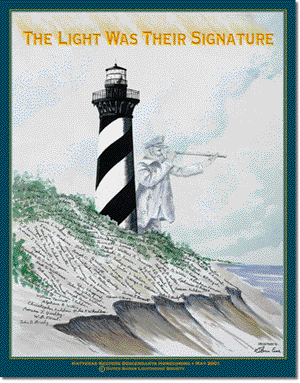
Since the early years of lighthouses, there have been numerous people to take care of these towers. Before advances in technology, there needed to be a person keeping watch over the lighthouse 24/7. Today, however, lighthouses are automated. They are solar-powered, so they turn on at sunset, and turn off at the first sign of light in the morning. Then they charge during the day, ready for the next night. Very little attention is given to the lighthouses nowadays, except daily tourism.
Keepers of the lighthouses were typically men; however, many women were also keepers and assistant keepers. In fact, many of the well known keepers who achieved status for heroism, have been women! Women have served as keepers and assistant keepers on every coast of America. Between
1820 and 1852, special treatment was given to women who survived their
husbands whom had been keepers. However, in 1852, the Lighthouse Board
insisted that women needed special approval from Washington to become
keepers. Although this did not deter women from becoming keepers, it did
reduce the number of women who did successfully become keepers.
Since approximately 1803, there have been approximately 83 Lighthouse Keepers for Cape Hatteras Lighthouse.
"The Fresnel lens installed in the 1870 lighthouse was powered by kerosene and could be seen approximately 16 miles from the shore. The keeper had to manually rewind the clockwork apparatus each day. The Fresnel lens usually took 12 hours for a complete cycle. When the lamp was electrified in 1934, the manual mechanism was no longer needed. Damaged by vandals, the giant glass Fresnel lens had to be replaced by a modern aero beacon in 1950. Today, electricity provides the rotating power and a photocell turns the light on and off," (Cape Hatteras, nps.gov).
The keepers consisted of a Principal Keeper and 2 Assistant Keepers. They did not live within the lighthouse, but rather, stayed in the watch room at the top of the tower. Initially, the Lighthouse Board provided housing, staple foods, and medicine. The keepers also earned a yearly salary of up to $800. During the night, each keeper was required to stand watch for 4 hour shifts each. During the day, the keepers were responsible for the following duties:
-
Hand carrying fuel up to the lantern room and fueling the lamp;
-
Trimming the wicks (later, replacing the mantles and pumping up the oil vaporizer);
-
Regularly cleaning and polishing (with jeweler’s rouge and whiting) the glass chimney, lenses and windows;
- Polishing vast amounts of brass fittings and tools;
- Cranking up the weight, latching it, and letting it free when they lit the lamp at night;
- Lighting and extinguishing the lamp (it was wasteful and unnecessary to burn it by day);
- Closing lantern room curtains by day to prevent damage from magnified sunlight through the lens, and discoloration of the lens glass;
- Cleaning and lubricating the clockwork;
- Painting the structure;
- Routine maintenance and repairs of all buildings;
- Greeting and sometimes lodging visitors and inspectors;
- Writing reports, keeping records, and ordering supplies;
- Monitoring the light and nearby shipping at night.
All this training was received on the job--little to no formal training was required. It wasn't until the mid- nineteenth century that advanced nations began to develop sets of written instructions.
Not included in the duties listed above is Rescues. Keepers and assistant keepers weren't there to just take care of the lighthouse. They also had to attempt to save victims of shipwrecks. Some heroic rescues have been recorded and well documented, but sadly, many successful rescues have not been documented. And not all rescue attempts have been successful, and all persons involved (victims and keeper) have perished.
Today, there is little use for a lighthouse, let alone a keeper of the lighthouse. Technological advances are to be blamed--radar, sonar, and satellite navigation all assist large vessels in navigating dangerous waters. Only small fishing boats find lighthouses of any use, though they are grand structures to visit as a tourist.

